

How to Build an LED Dance Floor: Step by Step Guide, Sizes and Costs
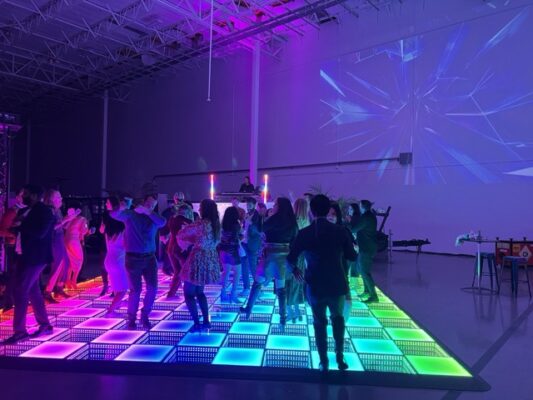
The short answer: to build an LED dance floor you need interlocking LED panels rated for foot traffic, a level base, edge ramps, a controller and a power plan. Size it for about half your guests dancing at once, at 4 to 5 square feet per dancer, so roughly 16 by 16 feet for 100 guests. Renting an LED dance floor in Los Angeles usually runs $15 to $30 per square foot with delivery and setup, and it is the easier choice for a one time event.
Updated September 2026 by the lighting and production team at Angels Music Productions in Los Angeles.
An LED dance floor changes the whole room the moment the lights come on. We install light up floors at weddings, Bar and Bat Mitzvahs, Sweet 16s and corporate events across Los Angeles, and this guide covers what we have learned: how to size the floor, what parts you need, how to put it together, what it costs, and when it makes more sense to rent an LED dance floor.
Step 1: Pick the Right Size
Not every guest dances at the same time. A good rule is to plan for about half of your guests on the floor at once, with 4 to 5 square feet for each dancer. Here is a simple guide:
| Guests | Floor size | Area |
|---|---|---|
| Up to 75 | 12 by 12 feet | 144 sq ft |
| 75 to 125 | 16 by 16 feet | 256 sq ft |
| 125 to 200 | 20 by 20 feet | 400 sq ft |
| 200 to 300 | 24 by 24 feet | 576 sq ft |
If your crowd loves to dance, like most Bar Mitzvahs and Israeli or Persian weddings, go one size up. Measure the venue first and leave room around the edges for the DJ booth, the tables and a clear walkway.
Step 2: Choose Your Panels and Materials
You can build the lights from scratch, but most people buy ready made LED dance floor panels that lock together. Here is what a full floor needs:
- LED panels. Tiles made for people to dance on, with a strong top and a weight rating. Common types are color panels, pixel panels that show patterns and video, and infinity mirror panels that look like a light tunnel under your feet.
- A level base. The panels need a flat, hard surface. On grass or uneven ground, lay a subfloor first.
- Edge ramps. Beveled edges around the floor so no one trips stepping on or off.
- A controller. A DMX controller or the maker’s app lets you choose colors, run patterns and sync the floor to the music.
- Power and cables. Plan your power before the event. Larger floors can need their own circuits. If you are not sure, ask an electrician.
Step 3: Put the Floor Together
- Clean and check the surface. Sweep the area and check that it is level. Fix any low spots with shims or a subfloor.
- Lay the panels. Start from one corner and lock each panel to the next. Keep the rows straight so the lines between the tiles stay tight.
- Connect the cables. Link the panels in the order the maker shows, then run the power and data cables to the controller. Tape or cover every cable that crosses a walkway.
- Add the edge ramps. Put ramps on every open side of the floor.
- Walk the floor. Step on every panel to check that nothing moves, rocks or clicks.
Step 4: Program the Lights and Sync to Music
Turn everything on and test each panel. Then set up your looks. We usually keep soft, slow colors for dinner, a warm glow or a monogram for the first dance, and switch to fast patterns that follow the beat when the party starts. For a disco theme, the classic flashing squares of the 70s are always a hit.
Tip: match the floor colors to your uplighting and décor so the whole room looks like one design. When we run the floor, the DJ can control it from the booth, so the lights follow the music all night.
Step 5: Safety and Care
- Check that the weight rating of the panels fits a full dance floor.
- Keep drinks off the floor and wipe spills right away.
- Tape down every cable and keep the power strips away from where people walk.
- Check the ramps and panel locks once more before guests arrive.
- After the event, wipe the panels, pack them flat and store them dry.
How Much Does an LED Dance Floor Cost?
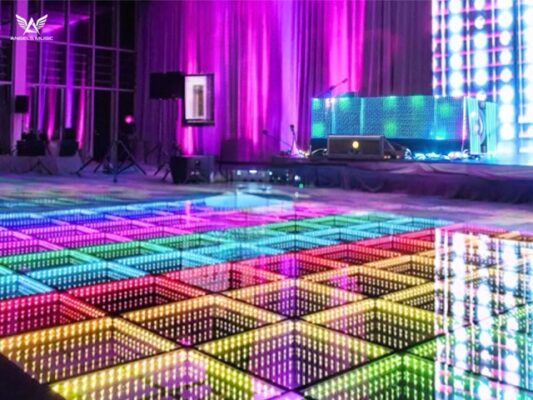
In Los Angeles, LED dance floor rental usually costs $15 to $30 per square foot, and most events land between $1,500 and $20,000 or more. The price depends on the type of panel, the size of the floor, custom designs or programming, how easy the venue is to load in, and how long you need it. Rental includes delivery, setup and pickup.
Buying a full set of commercial panels usually costs many times more than one rental, plus storage, a truck and a crew to move it. Building your own makes sense only if you will use the floor again and again, for example at a venue or a school.
Should You Build or Rent an LED Dance Floor?
Building a floor is a fun project, but it takes time, money, tools and some electrical know how. For a single wedding, Bar Mitzvah or party, renting is almost always easier. When you rent from Angels Music Productions, our team delivers the floor, sets it up, programs the lights to your colors and takes it away after the event. You can pair it with a DJ, lighting and special effects from the same team, so everything works together.
Cheaper Ways to Light Up a Dance Floor
Want the wow of a lit dance floor on a smaller budget? These options work great:
- Monogram or pattern projection. A gobo projector with a custom gobo puts your names or logo right on the floor.
- A custom dance floor decal with your monogram, logo or artwork. See our custom dance floor decal.
- A checkered dance floor for a retro look, lit with colored party lights.
- Uplighting and dance floor lights around a regular floor. See our event lighting guide.
- Low lying fog for the first dance, which looks like dancing on a cloud.
LED Dance Floor FAQs
How do you build an LED dance floor?
Size the floor for your guest count, buy LED panels rated for foot traffic, lay them on a level base, connect the cables to a controller and power, add edge ramps, then program the colors and patterns.
How big should a dance floor be for 100 guests?
About 16 by 16 feet. Plan for half your guests dancing at once, with 4 to 5 square feet per dancer.
How much does it cost to rent an LED dance floor?
In Los Angeles, about $15 to $30 per square foot, and most events land between $1,500 and $20,000 or more, including delivery and setup.
Can an LED dance floor go on grass or outdoors?
Yes, with a level subfloor under the panels and a dry forecast or cover. Outdoor floors need a safe power plan too.
Can the dance floor lights sync to the music?
Yes. Most LED floors have a sound active mode, and a DMX controller lets the DJ run patterns that follow the beat.
Plan Your Dance Floor With Us
Building your own LED dance floor can be a great project if you will use it many times. For one big night, renting from a professional team saves you the time, the risk and the storage. Tell us your venue and guest count and we will suggest the right size and look.
We can help with an LED dance floor rental, a wedding DJ, lighting and audio visual, and special effects for your event. Get a free quote.
Related articles
Step Onto the Future: How Interactive LED Dance Floors Are Reinventing Event Magic
Everything You Needed to Know About LED Dance Floor Rentals
Rethinking LED Dance Floors and Event Decor in 2025
Why Your Dance Floor Install Could Use a Reboot: Exploring Wired vs. Wireless LED Dance Floors
How to Create an Interactive Floor (Even If You Are Not a Techie)


