

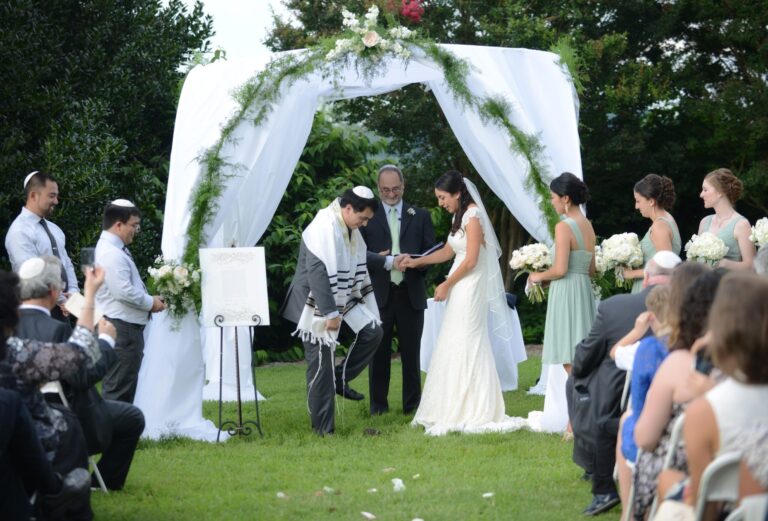
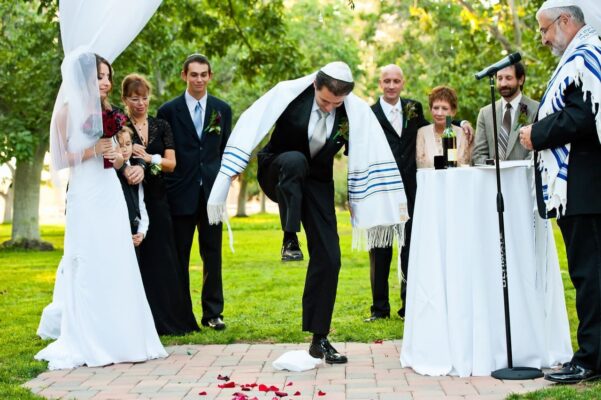
The short answer: at the end of a Jewish wedding ceremony, the groom, and today often the couple together, steps on a glass wrapped in cloth. The best known meaning is to remember the destruction of the Temple in Jerusalem, even at the happiest moment of your life. Many couples also see it as a sign that love is fragile and needs care, and that marriage changes you for good. When the glass breaks, everyone shouts “Mazel Tov!” and the party begins.
Updated September 2026 by the Jewish and Israeli wedding DJ team at Angels Music Productions in Los Angeles.
Breaking the glass is one of the most famous moments of a Jewish wedding. Even guests who have never been to one know the crash and the shout of Mazel Tov that follows. As DJs and MCs we have cued that moment at many Jewish and Israeli weddings, and couples often ask us where it comes from. There is more than one answer.
Where the Tradition Comes From
The Story in the Talmud
The oldest source is a story in the Talmud (Berakhot 31a). At his son’s wedding, the rabbi Mar son of Ravina saw that the guests were getting too wild. He took an expensive glass cup and broke it in front of them, and the room went quiet. Over time this became a custom: a short serious moment in the middle of great joy.
Remembering Jerusalem
The meaning most people give today is the memory of the destruction of the Temple in Jerusalem. Jewish tradition asks us to remember Jerusalem even at our happiest times. At some weddings the groom says a verse from Psalm 137 just before he breaks the glass: “If I forget you, O Jerusalem, let my right hand forget its skill.”
A Reminder That Love Is Fragile
Many couples see the broken glass as a picture of their relationship. Like glass, love is precious and can break, so it needs care every day. Others add that the glass can never go back to its old shape, just as the couple is changed for good by marriage.
Scaring Away Bad Spirits
In medieval Europe, many people believed bad spirits were drawn to happy events like weddings. A sudden loud crash was thought to scare them away. Few couples hold this belief today, but it helps explain why the custom spread so widely.
When and How the Glass Is Broken
What Happens During the Ceremony
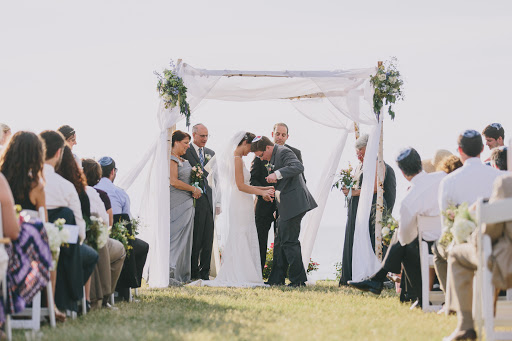
The glass is broken at the very end of the ceremony, after the Seven Blessings (Sheva Brachot) and the shared cup of wine. It is wrapped in a cloth napkin or a small pouch so no one gets hurt. The groom stomps on it, and at many modern weddings the couple steps on it together. The second it breaks, everyone shouts “Mazel Tov!”, the music starts and the couple walks back down the aisle as a married couple. Many couples keep the pieces and have them made into a keepsake, such as a mezuzah or a small piece of art.
Tips from our DJs and MCs
- Use a thin glass, such as a wine glass, or a light bulb, which makes a louder pop. Judaica shops sell wedding glasses with a pouch made for this.
- Place the glass on a hard floor or a small board. Thick carpet or grass can make it hard to break.
- Tell your officiant and your DJ the cue. We keep the recessional song ready and start it the moment the glass breaks, most often Siman Tov U Mazel Tov or a song the couple picked.
- Put a wireless mic on the officiant so every guest hears the blessings and the crash. Our guide to walking down the aisle songs covers the rest of the ceremony music and sound.
- If the glass does not break on the first try, just step again. It happens more often than you would think, and guests love it.
Other Jewish Wedding Traditions
The Hora
The Hora is the big circle dance of the reception. Guests hold hands and dance around the couple, then the bride and groom are lifted up on chairs, often holding the two ends of a napkin between them. The classic song is Hava Nagila. Our MC leads the Hora and calls up guests to lift the chairs, and we mix in Israeli hits to keep the circle going. Read more in our guide to Jewish wedding music trends.
The Chuppah
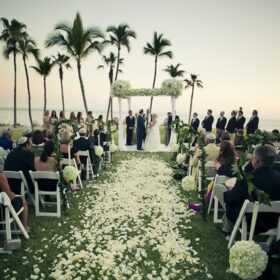
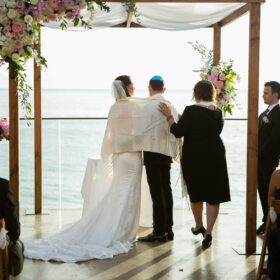
The chuppah is the canopy the couple stands under during the ceremony. It has four poles and open sides, and it stands for the new home the couple will build together, open to family and friends. Many chuppahs are covered in flowers, and some are made from a tallit, a prayer shawl. Some couples move the chuppah to the reception afterwards and use it as a backdrop for photos or for the sweetheart table.
More Jewish Wedding Traditions
- The Ketubah. The marriage contract, signed by two witnesses before the ceremony. Many couples frame it and hang it at home.
- The Bedeken. The veiling. The groom lowers the veil over the bride’s face before they walk to the chuppah.
- Circling. At many ceremonies the bride circles the groom seven times, or the couple circles each other, as a sign of building a new world together.
- The Seven Blessings. Sheva Brachot, seven blessings said over a cup of wine near the end of the ceremony.
- Yichud. A few quiet minutes the couple spends alone right after the ceremony, before joining the party.
Breaking the Glass FAQs
Why do Jews break a glass at a wedding?
Mainly to remember the destruction of the Temple in Jerusalem, even in a moment of great joy. Many couples also see it as a sign that love is fragile and needs care.
Who breaks the glass at a Jewish wedding?
Traditionally the groom. Today many couples break it together, and at some weddings the bride breaks a second glass.
When is the glass broken in a Jewish wedding?
At the very end of the ceremony, after the Seven Blessings. Guests shout Mazel Tov and the recessional music starts.
What do you say when the glass breaks?
Everyone shouts “Mazel Tov!”, which means congratulations or good luck.
What kind of glass is used?
A thin wine glass or a light bulb, wrapped in a cloth napkin or a pouch so no one gets hurt. Judaica shops sell wedding glasses made for this.
What song plays after breaking the glass?
Most couples choose Siman Tov U Mazel Tov, or an upbeat favorite of their own for the walk back down the aisle.
Plan Your Jewish Wedding Music With Us
Breaking the glass takes only a second, but it holds a lot of meaning: memory, care for each other and pure joy. If you are planning a Jewish or Israeli wedding in Los Angeles, our team knows every one of these moments, from the chuppah music to the glass, the Hora and the chair lift. Our DJs speak English, Hebrew, Spanish and Persian. Get a free quote.
Related articles
Israeli Wedding DJ in Los Angeles
Top Wedding Venues in Los Angeles
How to Plan the Perfect Wedding


